Change isn’t the problem
We've been walking the earth for about 300,000 years. I think it's fair to say, we can handle a little bit of change.
What we can’t handle though is uncertainty. That’s when doubt, insecurity and fear creeps in.
Too often, when we communicate change, we jump straight to the what. The practical details, the instructions, the “here’s what’s happening”.
But we skip the HUMAN part. Where we’re meant to actually help people understand why the change matters, the vision for the future, and (you could argue, most importantly) what’s in it for them.
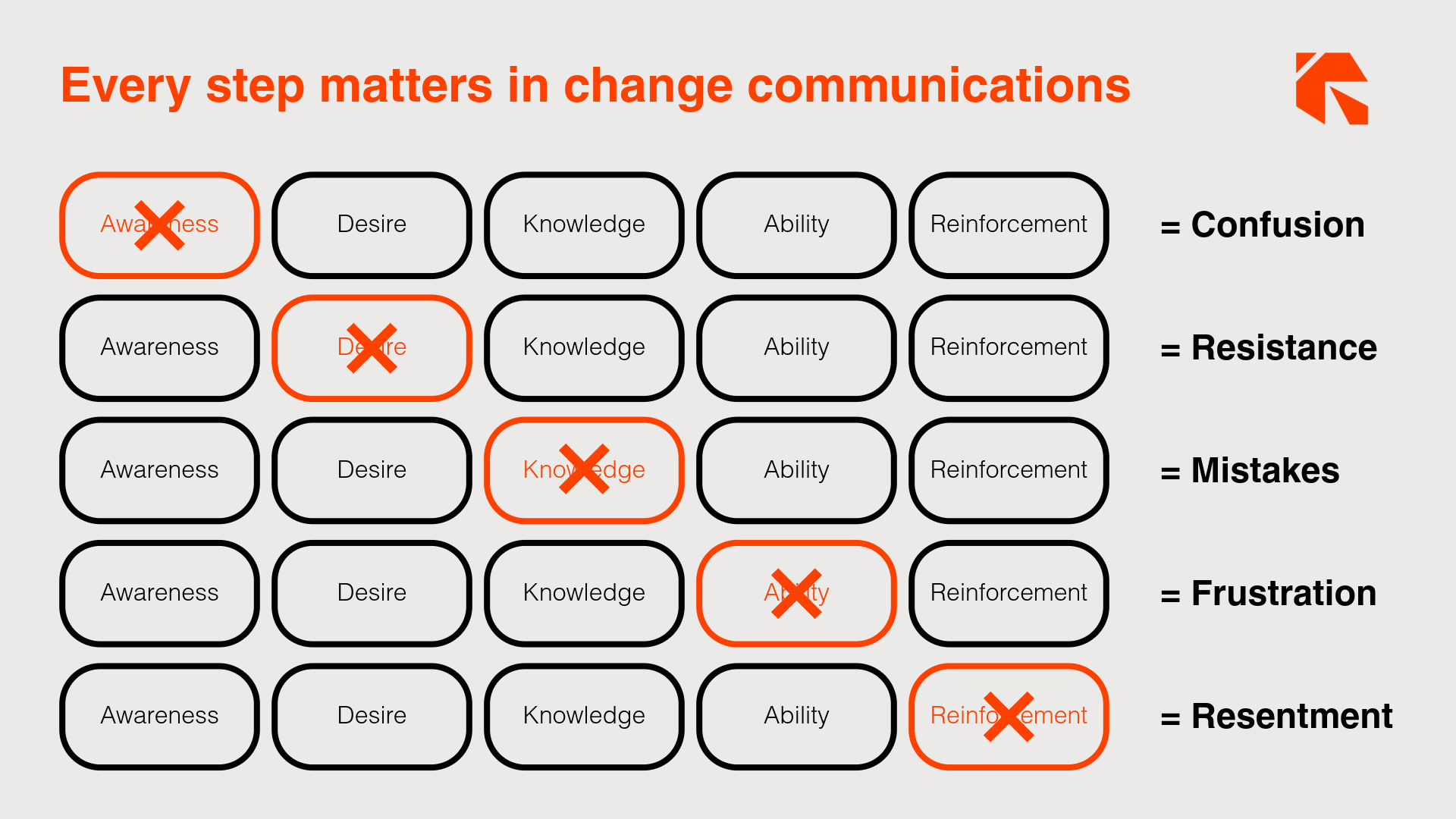
The ADKAR methodology is a helpful tool to have in the back-pocket. It’s simple. And it’s a useful way of communicating change. But it only works if we address every step.
Awareness
Without helping people understand why the change is happening, they’ll just feel confused about where this has come from.Desire
Without giving people a reason, a benefit, or a want to change, they’ll resist it.Knowledge
Without knowing how to change or what to expect, people will make mistakes.Ability
Without giving people the ability to change, they’ll never be able to do it effectively or efficiently… and they’ll get frustrated.Reinforcement
Without recognising people for changing, or supporting them through it, people will feel resentful or revert back to what they know best – the old way!
Communicating change is more than just sending information. It’s about creating clarity, building genuine interest, and giving people the support to change.
Take the time. Plan the journey. Address each step. That’s how change actually sticks.